High Mast Lighting
Ground-level maintenance for tower-height fixtures. A base-mounted controller system — unique to TechnoIntel — that cuts high mast downtime and cost, independently validated by the Bureau of Energy Efficiency.
40-Year-Old Lamps, Modern-Day Costs
Almost all high masts still run Sodium / MHL / Mercury high-pressure lamps. These were the right call 40 years ago — today they're power guzzlers, and LED has yet to solve the height and maintenance problem they create.
- Power Guzzlers — Sodium/MHL/Mercury HP lamps were ideal 40 years ago, now heavy energy consumers
- LED Isn't the Fix — LED has created tremendous hype, but it is not the solution for high mast
- Short Replacement Cycles — most records show these lamps need replacement every 6–12 months
- Costly, Difficult Maintenance — the height of the masts makes servicing difficult and expensive
- Lost IP65 Protection — once fixtures are opened for lamp replacement, they lose their ingress protection
- Insects & Dust — commonly cut off light and impair visibility once seals are compromised
- Frequent Control Failures — controls and ignitors are replaced frequently
- Heavy Spares Inventory — need to carry a huge stock of spares for regular maintenance
Maintenance, Moved to Ground Level
UNIQUE FEATURE OFFERED ONLY BY TECHNOINTEL
A long-distance controller for high mast — patent filing under progress — that removes the single biggest cost driver in high mast maintenance: working at height.
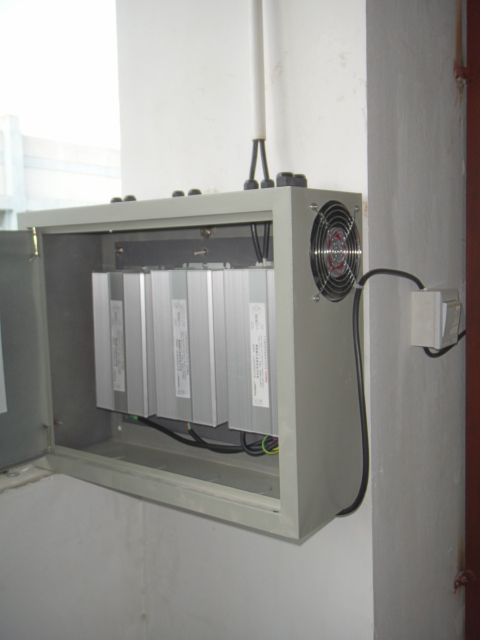
- No Ring Frame Lowering — no lowering and raising of the ring frame is required for controller replacement
- Base-Clubbed Controllers — part of the controllers are clubbed and installed at the base of the mast
- Plug Out & Plug In — maintenance becomes possible entirely at ground level
- Lower Cost, Less Downtime — the system drastically cuts down costs & downtime
- Patent Filing In Progress — a genuinely unique feature offered only by TechnoIntel
Fewer Fixtures. More Light.
BUREAU OF ENERGY EFFICIENCY — FIELD STUDY
An 18 × 400W HPSV high mast system was replaced with 8 × 300W electrode-less induction lamps on the same 30-metre tower, and lux readings were taken at 5-metre intervals by the Bureau of Energy Efficiency.
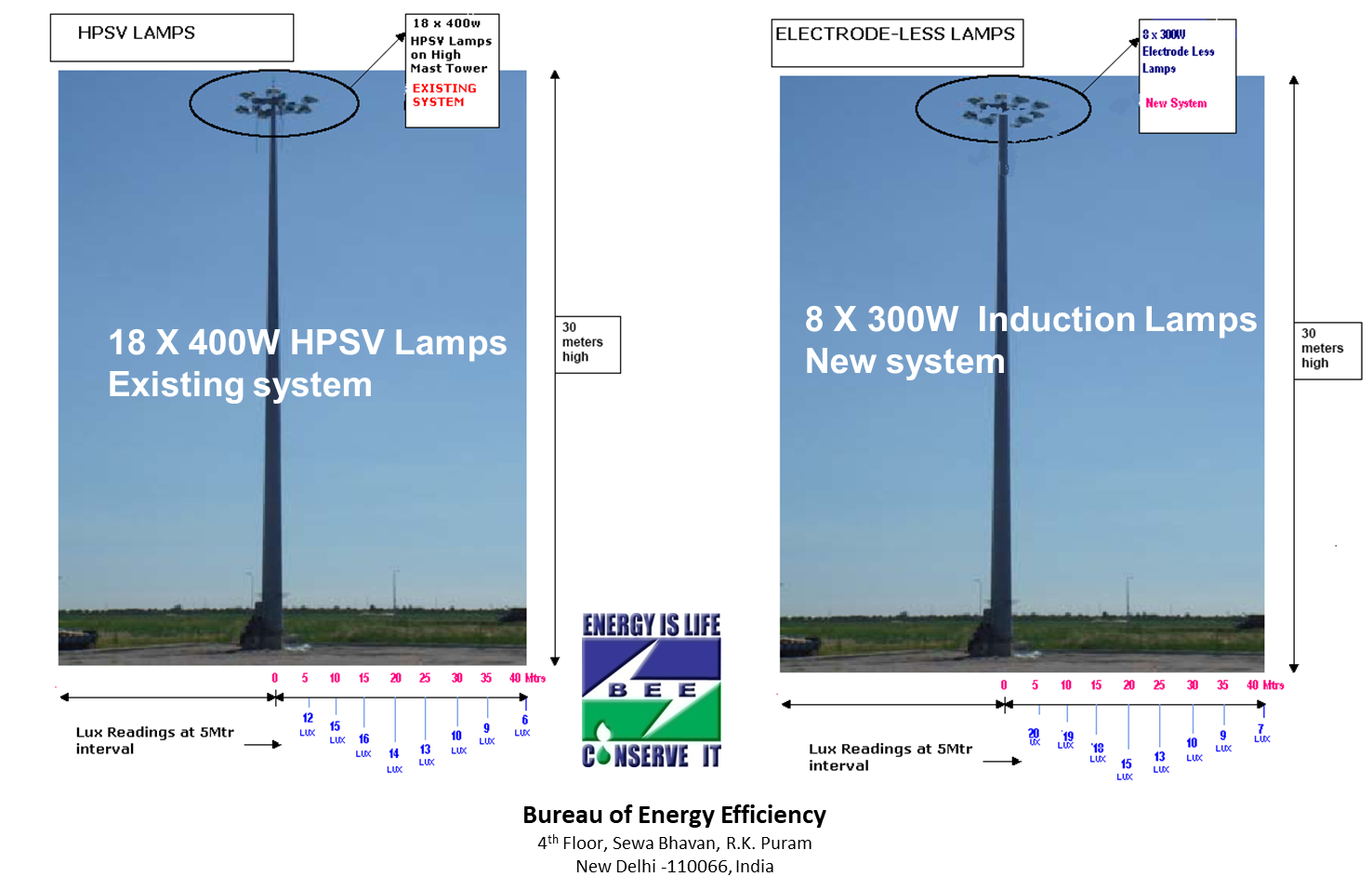
| Distance from base | 5m | 10m | 15m | 20m | 25m | 30m | 35m | 40m |
|---|---|---|---|---|---|---|---|---|
| 18 × 400W HPSV (existing) | 12 | 15 | 16 | 14 | 13 | 10 | 9 | 6 |
| 8 × 300W Induction (new) | 20 | 19 | 18 | 15 | 13 | 10 | 9 | 7 |
Lux values in lux (lx), read at 5m intervals along the ground plane. * Average computed from the 8 readings shown above.
- Lesser Quantity of Lights — fewer fixtures, lesser energy consumed
- Higher Lux Emittance Observed — the induction system met or exceeded HPSV lux levels at every measured distance